
Rummy Nose Tetra
August 11, 2024
Glass Ghost Catfish
August 11, 2024

Common Name: Bloodfin Tetra
Scientific Name: Hyphessobrycon eques
Compatibility:
- Tank Mates: Ideal for community tanks with other peaceful fish. Avoid long-finned fish as Bloodfin Tetras may nip at their fins.
- Shoal Size: Always keep in groups of 6 or more to minimize fin-nipping behavior.
Diet:
- Food: Not fussy; accepts most types of aquarium foods. They will eagerly eat a variety of foods, including flakes, pellets, and live or frozen options.
Tank Requirements:
- Temperature: 21 – 27°C
- Maximum Size: 4 cm
- Tank Setup: Prefers a planted tank with low- or slow-flow water. Ensure a well-planted environment to reduce aggression and provide hiding spots.
General Information:
- Appearance: Active and vibrant with a lively demeanor. Known for their comical behavior and constant search for food.
- Behavior: Fin-nipping behavior can be minimized by keeping them in larger groups of their own species.
- Coloration: Maintains vibrant coloration and active behavior when kept in appropriate tank conditions.
DISCLAIMER:
- Availability: All live fish are available only for in-store purchase. Each species may vary in appearance and coloration.
Related products
-
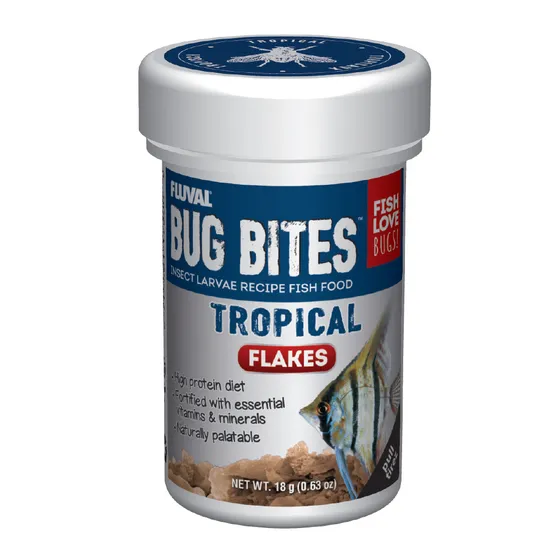
Fluval Bug Bites Tropical Flakes 18g
Original price was: $12.49.$10.50Current price is: $10.50.Black Soldier Fly Larvae Flakes Description: Black Soldier Fly Larvae Flakes are specially formulated to provide high-quality nutrition to fish. The flakes use sustainably raised Black […]
-
Api Tropical Flakes 31g
$19.99SKU:NT12 Barcode:317163028209 API Tropical Flakes Description: API Tropical Flakes offer a high-quality formula that enhances nutrient absorption, helping fish utilize nutrients more efficiently and release up […]
-
Fluval Bug Bites Tropical Fish Formula For Med/lrg Fish 45g
Original price was: $19.99.$16.90Current price is: $16.90.The Fluval Bug Bites Tropical Fish Formula for Medium/Large Fish 45g is a premium, insect-based daily diet designed to meet the nutritional needs of medium to […]